

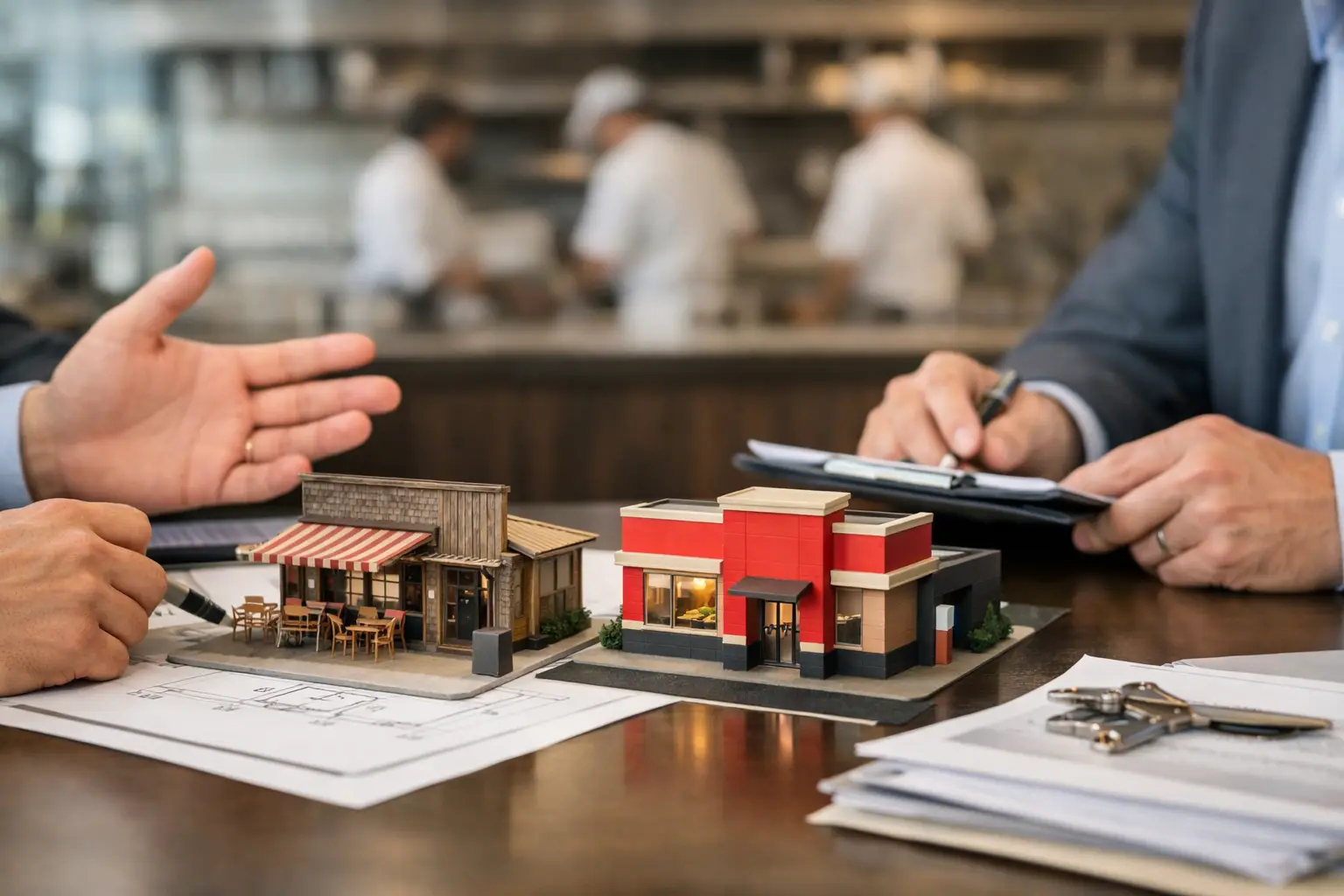
A restaurant franchise conversion is not a marketing exercise or a shortcut to opening locations faster. It is the work of turning a successful restaurant into a business that another operator can buy, learn, run, and grow without relying on the founder’s daily presence. Done well, it can create a more valuable, scalable asset. Done before the business is ready, it can amplify inconsistency across every new location.
For an independent restaurant owner, the central question is not, “Would people buy this brand?” It is, “Can another qualified operator reproduce the guest experience, unit economics, and operating discipline that make this restaurant successful?” That distinction determines whether franchising becomes a growth engine or an expensive distraction.
What a Restaurant Franchise Conversion Really Means
Restaurant franchise conversion usually describes the process of converting an established independent restaurant concept into a franchise system. The owner moves from operating one or several company-owned locations to building the structure required for independent franchisees to open and operate under the brand.
There is another use of the term: an independent restaurant may convert its existing location into a unit of an established franchise brand. That path can provide immediate brand recognition, purchasing power, and operating support, but it also requires the owner to surrender meaningful control over the concept, menu, systems, and brand identity.
For founders who want to franchise their own concept, conversion is a more involved strategic transformation. The goal is not simply to sell the right to use a name. The goal is to create a repeatable operating model with clear standards, franchisee support, compliant documentation, and economics that work for both the franchisor and the franchisee.
Start With Proof, Not Potential
A packed dining room is encouraging, but popularity alone does not make a restaurant franchise-ready. A franchise concept needs evidence that it performs consistently and can withstand normal business pressures such as labor turnover, food-cost fluctuations, seasonal demand, and local competition.
The strongest candidates typically have a clear customer proposition, reliable unit-level profitability, and operating practices that are already more systematic than founder-dependent. Guests should know what the brand stands for. Employees should be able to execute core tasks without constant improvisation. Managers should have usable reporting and decision-making tools.
A concept does not need to be a national sensation before it franchises. It does, however, need to demonstrate that its success is driven by a model rather than a single owner’s energy, relationships, or exceptional instincts. If the best results only happen when the founder is in the kitchen, greeting guests, approving orders, and solving every issue, the business still has systemization work to do.
The unit economics must support two businesses
Franchising creates two connected businesses: the franchisee’s restaurant and the franchisor’s support organization. The restaurant must generate attractive enough returns to recruit capable franchisees. At the same time, the franchisor must receive sufficient revenue through initial fees, royalties, and other approved income streams to provide real training, operations support, technology, marketing guidance, and network leadership.
This is where many early-stage franchise plans become unrealistic. A low royalty may sound appealing in sales conversations, but it can leave the franchisor unable to support franchisees properly. An excessive royalty may weaken the franchisee’s return and make recruitment difficult. The right structure depends on average unit volume, labor model, food and packaging costs, occupancy costs, startup investment, and the level of support the brand intends to provide.
Build the Restaurant System Before You Sell It
A prospective franchisee is investing in more than a menu and logo. They are investing in a proven method of operating a restaurant. That method must be documented, trained, measured, and improved over time.
The restaurant franchise conversion process should capture the way the business actually works at its best. This includes opening and closing routines, food preparation standards, recipes and portion control, inventory procedures, sanitation, hiring, training, guest recovery, local store marketing, technology use, vendor relationships, and financial reporting.
An operations manual should not be a large document created only to satisfy a requirement. It should help a franchisee and their team make the right decisions during a busy shift. The most useful systems are specific enough to protect consistency while leaving room for sound local management within approved standards.
Training deserves equal attention. A franchisee may be an experienced operator, a multi-unit investor, or a first-time business owner with strong leadership skills. Your training program must prepare them to launch the restaurant, hire and train their team, manage food safety, understand key performance measures, and protect the guest experience from day one.
Define the Franchise Model With Discipline
Once the operating foundation is clear, the next step is to define the franchise offer. This is where growth ambition becomes a commercial plan.
Territory strategy should be based on data and realistic market capacity, not broad promises. Franchisees need clarity around where they can develop, what development obligations apply, and how protected their market is. The franchisor needs a plan that prevents overselling an area while preserving room for future expansion.
The brand also needs to establish who its ideal franchisee is. Some restaurant concepts work best with owner-operators who are deeply involved in the local business. Others are better suited to experienced multi-unit operators with capital, infrastructure, and restaurant leadership teams. Trying to sell to both groups without a clear model often produces mismatched expectations.
Franchise disclosure, agreements, financial performance representation decisions, and state registration requirements require careful legal and strategic coordination. These documents shape the relationship for years. They should reflect the actual support, fees, standards, renewal terms, transfer rules, and obligations that the business can stand behind.
Launch With Support, Not Just Franchise Sales
Selling the first franchise is a milestone, not proof of a successful franchise system. Early franchisees are effectively helping validate the model in new markets and under new leadership. Their experience will influence the brand’s reputation, future sales process, and ability to attract quality operators.
A disciplined launch includes site selection guidance, real estate criteria, opening checklists, construction or design coordination where relevant, pre-opening training, field support, and early performance reviews. Restaurant operators know that opening week exposes every weak link. A franchisor needs the capacity to respond quickly when staffing, supply chain, equipment, technology, or local marketing issues arise.
Franchisee support should evolve after opening. Regular business reviews, operational audits, training refreshers, peer communication, and performance benchmarking help maintain standards while giving owners practical tools to improve results. Strong support is not about running the franchisee’s restaurant for them. It is about creating accountability, visibility, and a reliable path to better performance.
Growth should follow validation
There is a temptation to sell territories aggressively once a brand enters franchising. That can create short-term franchise sales revenue, but it can also overload a young support organization and dilute the brand before its systems have been tested outside company-owned locations.
A better approach is measured expansion. Use early openings to refine onboarding, validate real estate assumptions, identify training gaps, and confirm the economics in different trade areas. A concept with three well-supported franchise locations and strong franchisee relationships is often in a better position than one with ten signed agreements and inconsistent execution.
Common Warning Signs to Address First
Not every successful restaurant should franchise immediately. A delay can be the smartest growth decision when the concept still depends on one person, margins are inconsistent, menu execution is overly complex, or management reporting is unreliable.
Other warning signs include unresolved supplier dependence, unclear brand positioning, frequent staff turnover, weak site selection criteria, and a lack of capital to build the franchisor organization. Franchising is not a way to avoid fixing these issues. It makes fixing them more urgent because franchisees will rely on the systems you provide.
The good news is that these gaps can be addressed systematically. Many established restaurants are closer to franchise readiness than their owners realize, but they need an honest assessment and a structured plan before they begin offering franchises.
Turn Operational Success Into a Scalable Asset
The best restaurant franchise conversion begins with respect for what made the original business work. It protects the brand’s guest experience, strengthens the operating model, and gives franchisees a credible opportunity to build successful local businesses under a shared system.
Franchise Simply approaches this work through a practical path: develop the franchise foundation, define the model and support structure, then deploy a disciplined growth strategy. The objective is not to franchise quickly at any cost. It is to build a system that can recruit the right partners, support their performance, and create lasting value as the network grows.
If your restaurant has proven demand and repeatable strengths, the next opportunity may not be another location you personally operate. It may be the structured franchise system that allows capable owners to carry your brand forward with confidence.